Robert Desprez Communications

  • My Services
  • My Blog
  • About Me
  • Contact Me

Three Challenges of Writing for Mobile

November 30, 2017 by RDesprez Leave a Comment

Now that Android is the lead­ing oper­at­ing sys­tem used to con­nect to the Inter­net, tech­ni­cal writ­ers need to seri­ous­ly look at how their con­tent is being dis­played on smart­phones and tablets.

For years, smart­phone and tablet use has sky­rock­et­ed.  In 2016, the num­ber of smart­phone users was expect­ed to sur­pass 2 bil­lion (source: eMar­keter). Sim­i­lar­ly, there are about 1.5 bil­lion peo­ple who are expect­ed to use a tablet by 2019 (source: eMar­keter). Ear­li­er this year, Android has edged out Win­dows as the num­ber one oper­at­ing sys­tem used to access the Inter­net.

Mean­while, tech­ni­cal writ­ers appear to be slow to embrace mobile. In one study com­plet­ed last year of more than 700 tech­ni­cal com­mu­ni­ca­tion pro­fes­sion­als, only 24 per­cent of tech­ni­cal writ­ers pub­lish con­tent that would be con­sid­ered “mobile ready.”

Although there may be an unde­ni­able user demand for every­thing mobile, prepar­ing con­tent has its share of challenges.

Challenge Number One: Small Screen

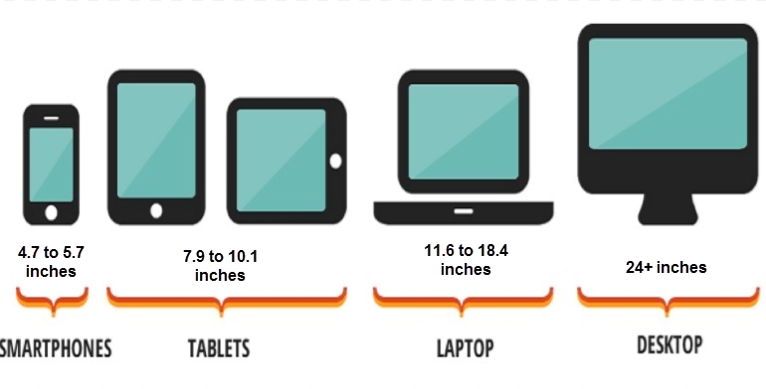
In spite of the mod­ern trend towards larg­er-screen phones, what makes mobile phones so con­ve­nient and portable is their small size. Com­pared with desk­top and even lap­top screens, phone screens accom­mo­date a lot less content—see the fol­low­ing illus­tra­tion com­par­ing the sizes of mon­i­tors, tablets, and smartphones.

As a result, mobile users must work hard­er to access the same infor­ma­tion and rely on their short-term mem­o­ry to refer to infor­ma­tion that is not vis­i­ble on the screen.

One way to mit­i­gate users’ small screens is to embrace brevi­ty. One usabil­i­ty con­sul­tant rec­om­mend­ed that if you write 100 words for a print-based doc­u­ment, con­sid­er writ­ing 50 words for the web. For mobile, aim to reduce the word count even more.

Challenge Number Two: Comprehension

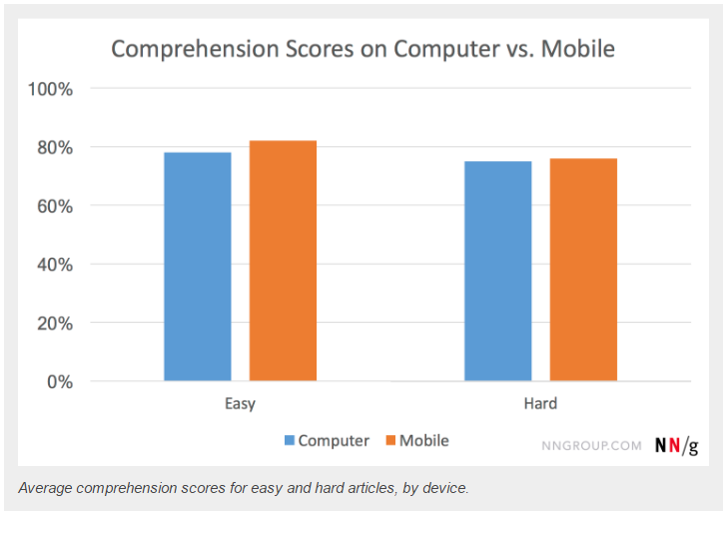
Jakob Nielsen, a usabil­i­ty con­sul­tant, has per­formed some stud­ies on user com­pre­hen­sion lev­els on mobile devices.

In a recent study, he found that, on aver­age, com­pre­hen­sion scores were slight­ly high­er when users read the arti­cles on mobile devices. How­ev­er, dif­fi­cult con­tent may cause low­er com­pre­hen­sion on mobile.

The dif­fi­cul­ty of the arti­cles (“easy” or “hard”) was deter­mined by the num­ber of words and the dif­fi­cul­ty of the lan­guage used (accord­ing to the Flesch-Kin­caid read­ing-lev­el for­mu­la). All of the arti­cles were pre­sent­ed as HTML pages cre­at­ed from the same sim­ple design template.

Easy pas­sages were read about as fast on both devices, but hard pas­sages actu­al­ly took longer to read on a mobile device ver­sus a com­put­er.  Easy arti­cles were about 400 words and writ­ten at a Grade 8 lev­el. Hard arti­cles were just under 1,000 arti­cles and at a Grade 12 level.

I would argue that tech­ni­cal com­mu­ni­ca­tion would typ­i­cal­ly fall into the hard category.

The take­away for me is again to sim­pli­fy your con­tent and to get to the point. You’re ask­ing a lot if you write a 1,000-word arti­cle when you know that some users will be read­ing the con­tent on a 5‑inch screen.

Challenge Number Three: Distraction Levels

Smart­phones have rev­o­lu­tion­ized how we live. But as mobile phones are portable, we are more like­ly to be inter­rupt­ed when using them. Nielsen notes that the aver­age user may be using a desk­top for more than 150 sec­onds while the aver­age mobile ses­sion dura­tion is just 72 seconds.

Nielsen rec­om­mends:

  • Allow users to save his­to­ry, as well as to email or share infor­ma­tion with them­selves or others.
  • Pri­or­i­tize what is essen­tial on a page and sim­pli­fy tasks and inter­ac­tions. Because atten­tion is frag­ment­ed, strive to show users what they need as soon as possible.

As users are more and more like­ly to read tech­ni­cal com­mu­ni­ca­tion on a mobile device, it’s an excit­ing time for tech­ni­cal writ­ers to learn new skills and approaches.

Filed Under: Career Development, Online Writing for Mobile, Robert Desprez | Vancouver technical writer | Blog, Technology Tagged With: mobile, research, smartphones, tablets, technical communications, technical writing, writing

About Robert Desprez

I have worked as a Vancouver technical writer for more than 20 years, working at some of British Columbia's largest high-tech firms. I have served in leadership positions for the Society for Technical Communication and have worked as a writing instructor at Vancouver's Simon Fraser University.

Robert Desprez Follow 1,204 239

Vancouver Technical Writer. Former Instructor at Simon Fraser University. Dog Lover. Coffee Drinker. Tennis and Piano Player.

robert_desprez
robert_desprez avatar; Robert Desprez @robert_desprez ·
11 Apr 2043062547159589215

Image for twitter card

ChatGPT vs. Gemini: I Tested Both, and the Winner Might Surpise You

Curious about AI chatbots but don’t know where to start? ChatGPT and Gemini are two of the best, and I'm her...

www.pcmag.com

Reply on Twitter 2043062547159589215 Retweet on Twitter 2043062547159589215 0 Like on Twitter 2043062547159589215 0 Twitter 2043062547159589215
robert_desprez avatar; Robert Desprez @robert_desprez ·
22 Mar 2035801301733527930

Image for twitter card

Remote work can help offset oil price shock, IEA says | LinkedIn

The International Energy Agency has outlined 10 strategies to help oil-consuming nations mitigate the impact of rising prices.

www.linkedin.com

Reply on Twitter 2035801301733527930 Retweet on Twitter 2035801301733527930 0 Like on Twitter 2035801301733527930 0 Twitter 2035801301733527930
robert_desprez avatar; Robert Desprez @robert_desprez ·
21 Mar 2035393914396692588

‘Microshifting’ puts a new spin on 9-to-5 schedules

Image for twitter card

‘Microshifting’ puts a new spin on 9-to-5 schedules

A new way of scheduling work time is remaking the typical nine-to-five routine. “Microshifting” is a trend that ...

apnews.com

Reply on Twitter 2035393914396692588 Retweet on Twitter 2035393914396692588 0 Like on Twitter 2035393914396692588 0 Twitter 2035393914396692588
robert_desprez avatar; Robert Desprez @robert_desprez ·
16 Mar 2033691191984984182

The cost of digital disorganization is nearly a month of productivity per year

Image for twitter card

The cost of digital disorganization is nearly a month of productivity per year

The problem often stems from unclear systems and ownership inside organizations, but simple habits and clearer workflo...

www.theglobeandmail.com

Reply on Twitter 2033691191984984182 Retweet on Twitter 2033691191984984182 0 Like on Twitter 2033691191984984182 0 Twitter 2033691191984984182
Load More

Recent Blog Posts

  • Using ChatGPT to read smarter
  • ChatGPT: The AI-powered proofreader
  • Four ways Confluence could be better
  • First impressions of MadCap’s purchase of IXIASOFT

About Me

Robert Desprez I have worked as a Vancouver technical writer for more than 20 years, working at Kodak, Boeing, Teck Resources, and FortisBC. In addition, I have worked as a writing instructor at Simon Fraser University in Vancouver.

Contact Me

Robert Desprez Com­mu­ni­ca­tions Inc.
North Van­cou­ver, British Columbia
Canada
Phone: 604–836-4290

  • Email
  • LinkedIn
  • Twitter

Copyright © 2026  · Robert Desprez Communications Inc.